
In ancient times, the people of Kerala who inhabited the forests suffered greatly due to various diseases and crop failures. To escape these hardships, they worshipped the “Mala Daivangal” (Mountain Deities). These early ancestors worshipped stones believed to possess divine energy gathered from the forest by placing them at the base of trees. During that era, the meat of hunted animals was offered to these deities along with their blood. A portion of their agricultural produce was also placed before these stones to please the Gods.
Goddesses such as Karineeli, Kali Devi, Mala Muthi, Malavarathamma, Chovva, Panchami, Chamundi, and Karinkali, along with Gods like Chathan, Mala Muthappan, and Mala Nayadi, were known as the primary forest deities. Even as forests transitioned into villages, the people did not abandon these mountain Gods. To ensure agricultural prosperity, protect children and family members from ailments, and increase wealth, villagers performed special rituals to please them. These deities were also worshipped to secure victory in wars.
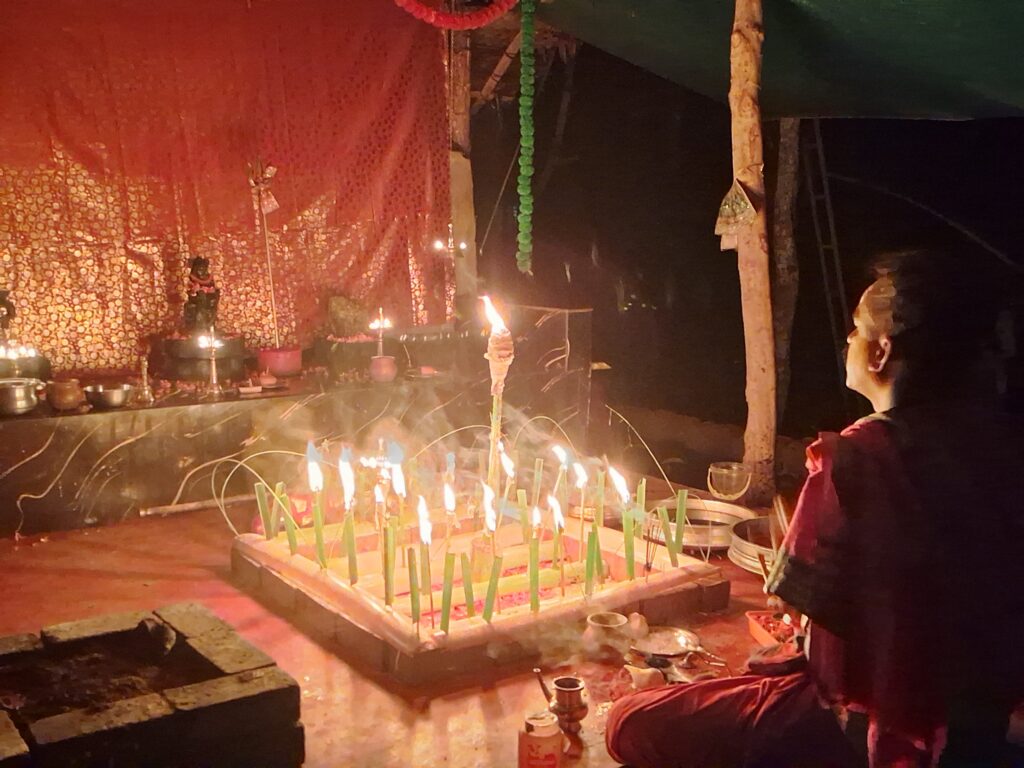
As the wilderness gave way to settlements, the people took great care not to offend these powerful spirits. They preserved the trees where the Gods were said to reside and ensured the sacred stones remained undisturbed. These consecrated sites became known as Kavukal (Sacred Groves). The priests who performed rituals in these groves were called Komaram or Madapathi. It was believed that during special ceremonies, the mountain deities would enter the priest’s body to communicate with the devotees.
The power of these deities was said to peak on New Moon (Amavasya), Full Moon (Pournami), and Panchami days. On these occasions, special animal sacrifices and rituals were conducted. To achieve specific desires or seek divine protection, sacrificial rites were performed, particularly on Tuesdays and Fridays. This method of worship used by the Dravidian people of Kerala to honour these grove or mountain deities later became known as Guruthi Pooja.
Blood and raw meat were the primary elements used in these Guruthi rituals. However, as villages evolved, people from outside Kerala began to settle in these areas. They brought new religious beliefs, displaced the mountain deities from the groves, and constructed temples to worship new Gods.
The Decline and Suppression of Ancient Traditions
When these outsiders seized control of Kerala’s villages, they destroyed many of the sacred stones and groves. Nevertheless, some continued to worship these deities in their own way, having recognised the true power of these spirits. Even today, some descendants of those who came from outside Kerala still worship these mountain Gods as their family deities (Kula Daivam) to the best of their ability.
The historical influence of Buddhism in Kerala also contributed to the decline of sacrificial rituals. Later, shifting political landscapes further altered the nature of these ceremonies. Despite these changes, tribal communities in the forests continued to protect these Gods through traditional sacrificial rites.
Interestingly, the British colonisers feared these deities. They realised that Kerala’s kings, with the help of tribal communities, performed sacrifices to please the mountain Gods to gain strength in their battles against British rule. To weaken the influence of these spirits, the British banned animal sacrifices. While they often hunted animals for sport themselves, they prohibited ritual sacrifices under the guise of “animal welfare.” Some argue this was a strategic move to suppress the power of local Gods and impose British religious beliefs on the populace.
The Essence of Guruthi and Modern Revival
It was essentially with the arrival of the British that Guruthi rituals involving animal sacrifice began to vanish. Following India’s independence, successive governments in Kerala officially banned these practices, labelling them “primitive.” The literal meaning of the Malayalam word Guruthi is “to sacrifice.” Traditionally, the sacrificed animals were offered raw to the Gods.
Only animals fit for human consumption were offered as oblations. After the ritual, the meat was cleaned, cooked, and consumed by the devotees. These worshippers did not hunt for sport; they only took from the forest what was necessary to satisfy their hunger. They even employed a mystical practice known as Kadu-kettu (Forest-binding) to turn away those who entered the woods solely for recreational hunting.
Due to current government bans on animal sacrifice, performing a traditional Guruthi ritual is difficult. Consequently, water coloured deep red is now used as a symbolic substitute for blood. As forests turned into villages and later into cities, many sacred groves were destroyed for land and profit. However, while their physical shrines were demolished, the deities themselves are believed to still live among us.
The modern population of Kerala is beginning to realise this truth. Many who faced issues such as infertility or persistent family conflicts discovered through astrological consultations (Prashnam) that their troubles stemmed from the “displeasure of the family deity” (Kula Devatha Dosham). Historical research has helped the modern generation understand that these mountain deities were the original ancestral Gods for the vast majority of Keralites.
Worship at Sri Kalikavu
Younger generations have recognised that, despite the destruction of the groves, the power of these Gods remains. There is a growing revival in the worship of deities like Kuttichathan, with people realising these potent forces can be invoked for the fulfilment of their desires.
While animal sacrifice is prohibited, bird sacrifices (such as roosters) are still practiced in parts of Malabar and Thrissur. Similar traditional offerings can even be observed in certain local Christian churches. Pleasing these foundational deities of Kerala is believed to remove financial hardships, chronic illnesses, and the effects of “evil eye” or sorcery.
However, a word of caution: these deities should not be confined within the rigid structures of a temple for long. They do not wish to live “imprisoned” in temples; doing so may invite misfortune. They are wandering spirits who travel across the land. It is said they visit homes with children, playing with them and curing their ailments. The establishment of a Kavu is believed to bring blessings of marriage and children to a community.
Preferred Offerings:
• Chicken curry and Toddy (local palm wine).
• Roasted dried fish and roasted rice powder.
• Cooked rice and roasted Papadums.
• Boiled tubers/root vegetables.
To achieve one’s goals, worshipping these forest Gods is highly effective, provided the Panchamakara Pooja is performed correctly—otherwise, there may be spiritual repercussions. These are not deities who are satisfied by mere symbolic or imaginary worship.
Recognising the significance of the sacred groves, the mountain Gods, and the Guruthi rituals, Sri Kalikavu continues to worship Muthappan, Chathanmar, Kali Amma, Panchami Devi, and Karimkali Amma while respecting current laws. We are currently working to restore a Kali Amma grove that was destroyed 800 years ago. We seek everyone’s support and pray that the Goddess of the Grove blesses all, regardless of caste or creed.
To know more about guruthi pooja click>>>>
Book guruthi Pooja : Valiya guruthi, Cheriya guruthi, Malavara Guruthi
CaLL:8129465837